Strengthening Waqf in Uzbekistan as a Tool for Social and Economic Development
In cooperation with the Islamic Development Bank, UNDP supports the Uzbekistan Government's efforts to develop the waqf system in the country.
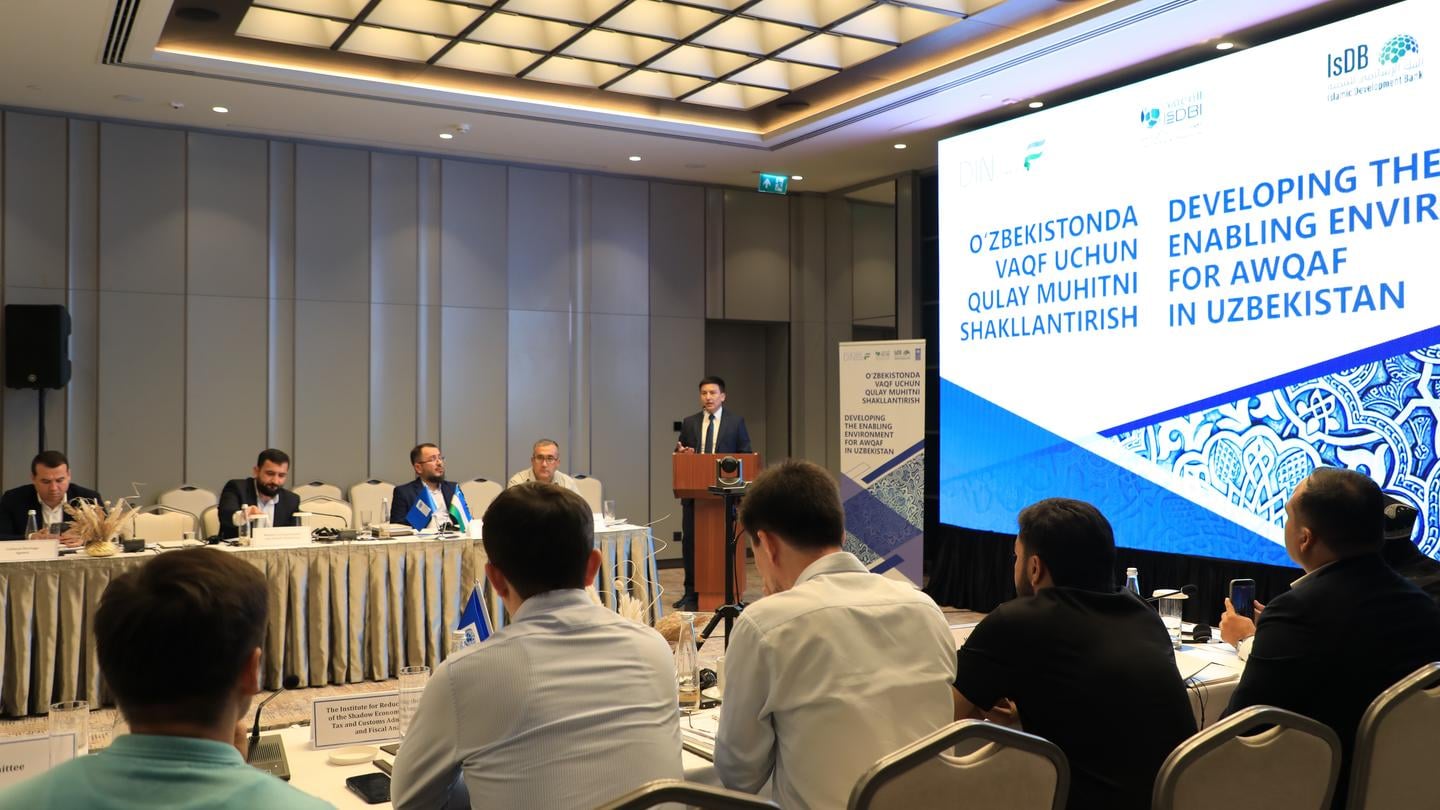
Tashkent, 3 August 2026 – The United Nations Development Programme (UNDP), together with the Committee on Religious Affairs of the Republic of Uzbekistan and the Islamic Development Bank, organised a round table dedicated to presenting and discussing the findings and recommendations of the "Concept Paper on the Introduction of the Waqf System in Uzbekistan", prepared by a UNDP expert team. The first event of its kind, it became an important milestone in discussing strategic approaches to the further development and expansion of the waqf institution in the country. More than 40 key stakeholders attended, including representatives of the National Social Protection Agency under the Presidential Administration, the National Agency for Perspective Projects, the Muslims Board of Uzbekistan, the "Vaqf" Public Charity Foundation, the Ministry of Economy and Finance, the Central Bank, the Ministry of Justice, the Ministry of Culture, the Tax Committee, the Chamber of Commerce and Industry, the International Islamic Academy, the Tashkent Islamic Institute and other bodies.
3. Current State of Islamic Finance Legislation in Uzbekistan
- Steps Taken: In recent years the Government of Uzbekistan has shown great interest and commitment to introducing Islamic finance in the country.
- Law Adopted: In June 2026 the Law of the Republic of Uzbekistan "On Amendments and Additions to Certain Legislative Acts Aimed at Introducing Islamic Banking in Uzbekistan" was adopted and entered into force.
- Law Under Discussion: A draft Law "On the Capital Market", containing special chapters on Islamic sukuk securities, is currently at the stage of review and discussion in the Supreme Assembly of Uzbekistan (Oliy Majlis).
4. The Nature and Potential Role of the Waqf Institution
- Social and Economic Mechanism: Waqf is an important instrument of Islamic social finance. By allowing privately owned assets to be set aside for long-term public benefit, it has historically served as a key institutional mechanism for social welfare and community development.
- Historical Experience: Throughout Islamic history, waqf foundations financed large social facilities and public infrastructure that served communities for centuries.
- Sustainable Financing: As a form of gift/donation (endowment), waqf supports long-term and sustainable financing for social, educational and charitable purposes. It is a complementary mechanism that contributes to sustainable development only where state resources are insufficient.
- Global Strength: According to a joint report by the World Bank, the International Centre for Education in Islamic Finance (INCEIF) and the International Shari'ah Research Academy for Islamic Finance (ISRA), the value of global waqf assets is estimated at between 100 billion and 1 trillion US dollars.
- Priorities for Uzbekistan: The potential role of waqf in Uzbekistan is closely linked to national priorities such as poverty reduction, human capital development and improved access to basic services.
"Historically, Waqf has been a powerful tool for community development and social support. A well-managed Waqf system can offer long-term solutions for poverty reduction, rather than short-term relief, and can also help finance vital areas such as healthcare, education and housing. Drawing on international successes and addressing our local challenges, we are building a clear roadmap for the sustainable future of Uzbekistan,"
— Akiko Fujii, UNDP Resident Representative in Uzbekistan
6. Analysis of the Concept Paper and Existing Challenges
In presenting the Concept Paper, the main purpose of the round table, UNDP experts highlighted the following points:
- Initial Steps: In 2018 the special "Vaqf" Public Charity Foundation was established to promote Waqf in Uzbekistan.
- Legislative Gap: The existing legislation does not provide an adequate legal and regulatory framework for the efficient, full-scale operation of the Waqf system.
- Need for a Special Law: A special law is needed to secure the rights of Waqf founders and beneficiaries and to regulate Waqf-related matters.
- Demand for an Independent Body: As in countries with developed Waqf systems, it is advisable to establish a specialised independent institution in Uzbekistan to oversee, manage and coordinate Waqf matters.
- Incentive Mechanisms: Appropriate financial and tax incentives are required to encourage people to establish Waqf.
Write a comment
Sign in to leave a comment. No password needed — we email you a one-time link.
Sign in
Comments
No approved comments yet.