To Whom Is the Sale of Weapons and Strategic Goods Not Halal?
All Islamic jurists (fuqaha) are unanimous that selling weapons to combatants is strictly forbidden.
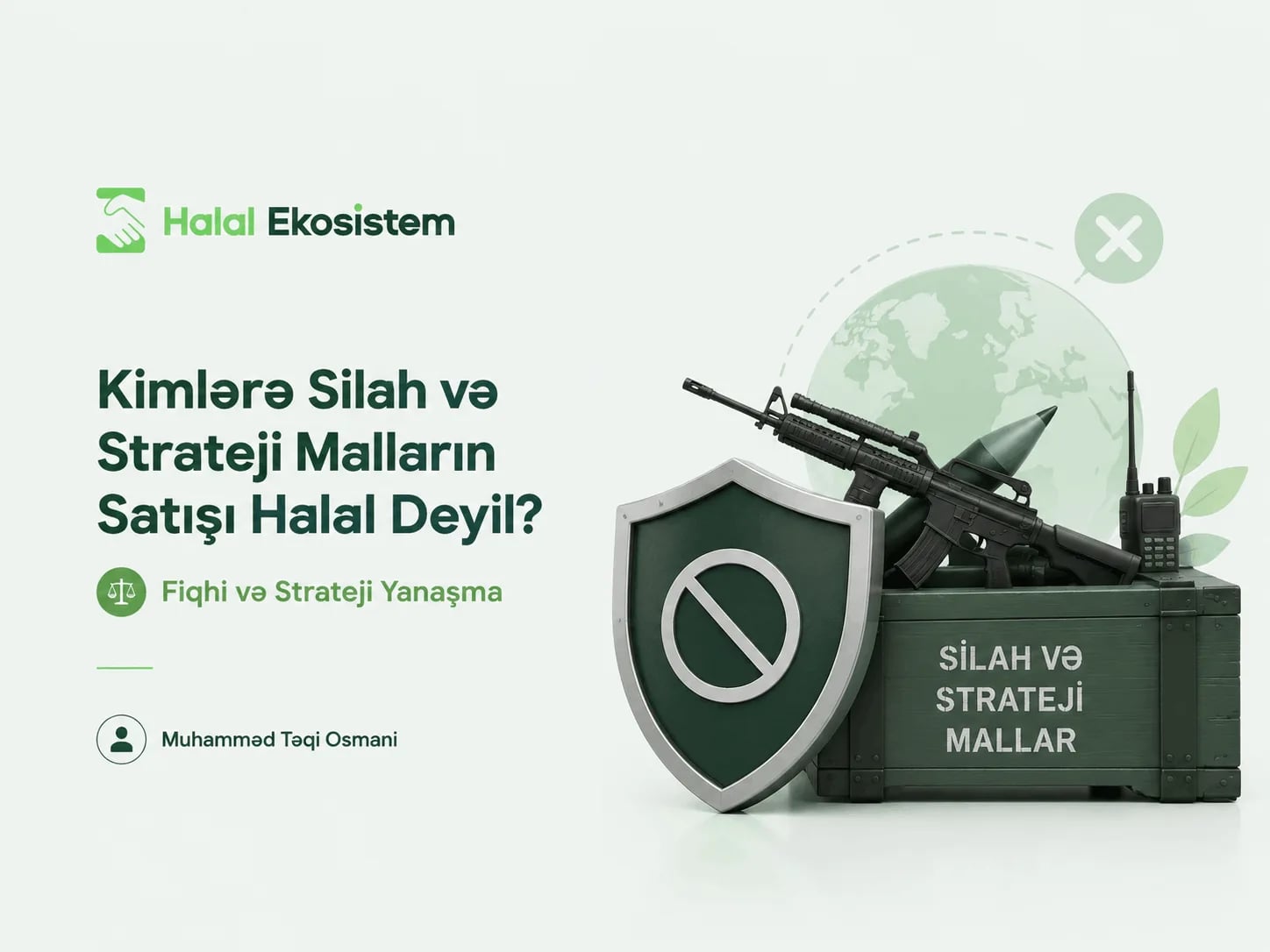
(This text has been prepared on the basis of the two-volume work Fiqhu’l-Buyu, written by Muhammad Taqi Usmani, who is regarded as a great scholar of our era)
One of the issues of particular importance in Islamic law of obligations is the sale of weapons and strategically important goods to non-Muslims, especially to those who are at war with the Muslim community (combatants). All Islamic jurists (fuqaha) are unanimous that selling weapons to combatants is strictly forbidden. The main reason (illa) for this prohibition is not simply that they hold a different belief, but the possibility that the weapons sold will be used against Muslims
(the lands of Islam) and that the enemy side will be strengthened militarily. The seriousness of the matter is such that even to rescue captured Muslims, it is not legally permitted to give weapons to the other side as ransom.
The Legal Status of the Contract and the Approach of the Schools of Law
So if, despite the prohibition, any person or company sells weapons to non-Muslims, how is this sale contract assessed legally? On this question the four major schools of law followed different methodologies:
- According to the Shafii and Hanbali schools: Such a contract is void from the outset (regarded as non-existent) and produces no legal consequences. It is considered wholly invalid without even needing to be rescinded (annulled).
- According to the Hanafi and Maliki schools: This contract is considered structurally concluded (valid in formation). This is because there is no legal defect in the fundamental conditions and pillars of the contract. However, because of external factors surrounding the contract, namely the danger of strengthening the enemy, this sale is not permissible (jaiz) and is regarded as disliked (makruh). That is, even if the contract is concluded, the state does not allow those weapons, equipment or goods to be taken out of the country (to enemy territory) and directly prevents it.
When a combatant who has entered Muslim lands under a guarantee of safety (aman) returns (a combatant who has entered Islamic land under aman may stay here for one year at most), he is not permitted to take with him strengthening goods such as weapons and horses, and those goods are confiscated from him.
The Modern Scope of the Concept of Weapons and the Sale of Raw Materials
In Islamic civil law, the concept of "weapons" is not limited to traditional means such as swords, rifles or shells. Every means that could strengthen the enemy militarily and strategically falls within the scope of this prohibition. Whereas in the classical period this included raw materials such as iron and copper and mounts such as horses, in today's economic reality oil, natural gas, modern technologies, computer programs (software), unmanned aerial vehicles and even strategically significant information also belong to this category. Today, information (data) obtained by various means, especially when processed by artificial intelligence, is widely used to target and kill Muslims (Sources: L.A. Times, Human Rights Watch, SETA,Guardian)
Regarding the sale of the raw material of weapons (for example, iron), Shafii jurists add a distinct detail and state that it is permissible if it is not certain that the iron sold will be used in the weapons industry (if it is known that it will be used in a completely different field, for example civil construction). The Hanafis, however, regard the sale of iron, the raw material of weapons, as equally (makruh) as the sale of the weapon itself is forbidden.
In short, in Islamic law the sale of every means that will add strength to the enemy's strength, give them superiority in war and create the possibility of harm to Muslims is strictly forbidden.
Selling Weapons to Rebel Muslims and to Allies
The main logic behind the prohibition of selling weapons is not mere difference of belief but the protection of the security of society. Therefore, even though they are Muslims, it is absolutely forbidden to sell weapons to rebels who rise up in armed insurrection against the state, to highway robbers, terrorist groups and those who threaten society. This is because selling weapons to them means directly creating a threat against society itself.
On the other hand, it is permitted to sell weapons to groups or states that, although non-Muslim, are allied with Muslims and fight against a common enemy. Likewise, sales may also be made to non-Muslim citizens (dhimmis) living in peace in Islamic land, provided there is no likelihood (danger) that they will pass these weapons to the enemy. The main aim is to prevent the possibility that the weapons sold will harm Muslims in the future and to protect the general interest of the Muslim community, that is, its maslaha.
Selling Food and Basic Necessities
In trade, the extent and limits of the prohibition vary according to conditions of peace and war. In times of truce and peace, there is no problem in selling everyday necessities such as food, drink and clothing to non-Muslims. However, while war is directly ongoing, especially when the other side's cities or fortresses are under siege, even selling them the most basic needs such as food and water is forbidden. At such a strategic moment, selling them the goods needed to stay alive defeats the purpose of the siege and amounts to support for the enemy.
The Principle of Governance and Maslaha
All these legal norms show that the question of selling strategic goods in international trade is formed directly around the society's "maslaha" (general interest and security). In accordance with changing economic and political conditions and the state of peace or war, the final decision on such sensitive trade operations belongs to a just head of state (imam) and to the legal frameworks he determines.
Especially in the modern globalizing world, in an age when relations between states are intertwined and borders have acquired a different meaning (in conditions where applying the classical map divisions has become difficult), such trade relations must be governed solely and exclusively with regard to the strategic benefit of society.
- For detailed information on the topic: https://www.youtube.com/watch?v=0Njf1nxKWhU&list=PLxKXjooWH1bHJN0OUGUeCw_giWh12GtVB&index=113
Write a comment
Sign in to leave a comment. No password needed — we email you a one-time link.
Sign in
Comments
No approved comments yet.